The Most Dangerous Moment in Infrastructure Is When "Everything Looks Fine"
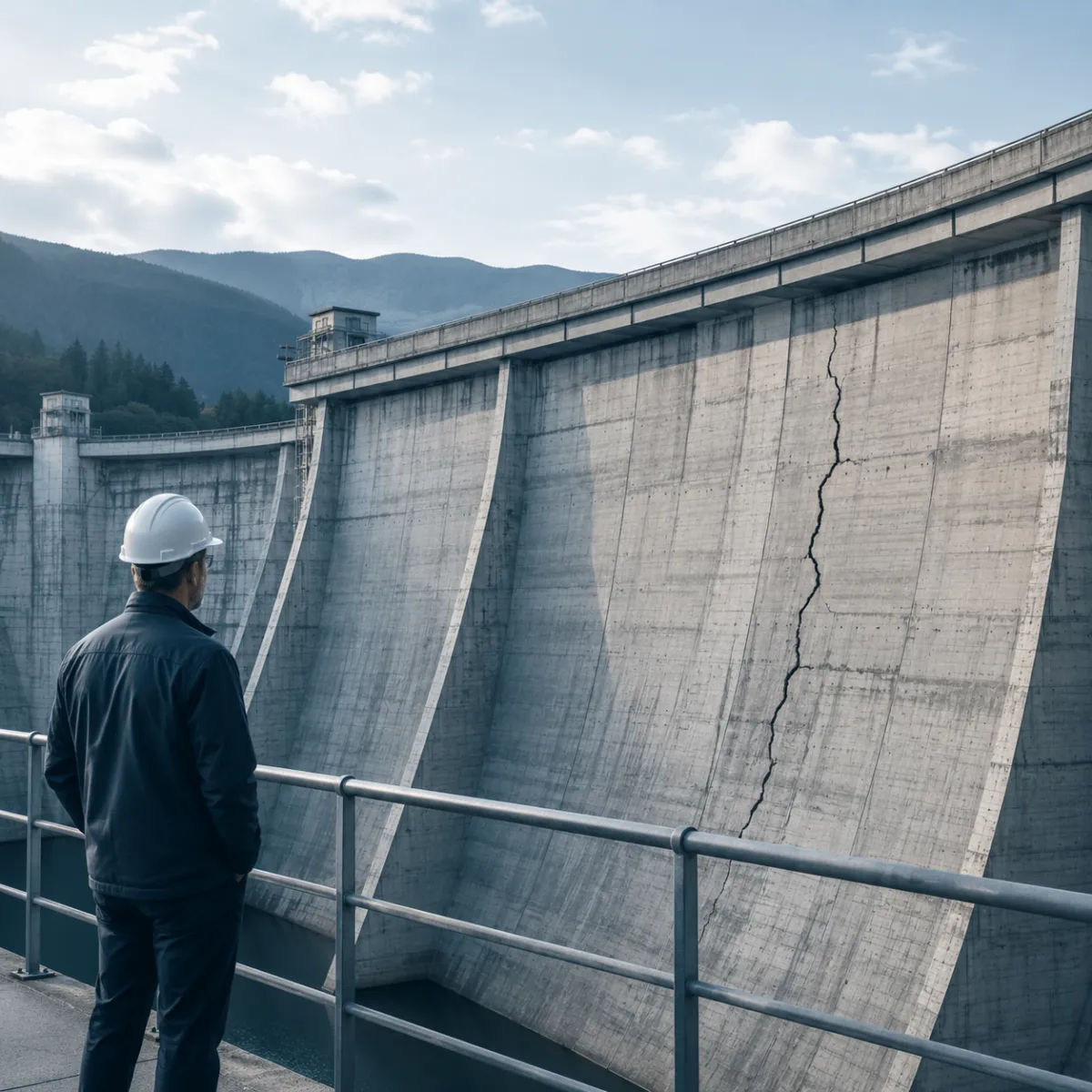
A dam doesn't become dangerous when the water breaks through.
It becomes dangerous earlier, when the first crack appears, and the wall is still standing. The structure looks sound. Operations continue. Nothing has forced an emergency meeting. And that appearance of normalcy is precisely what makes the moment so dangerous.
The same dynamic often plays out in data centers and industrial environments. Systems are online, customers are served, and production continues — so infrastructure stays out of the leadership conversation. But failure rarely begins with the outage. It begins when small warning signs become familiar enough to ignore.
Uptime Is Not the Same as Readiness
The instinct to equate uptime with reliability is understandable. If the system is running, the system is fine. But uptime only tells leaders the system is functioning — not how hard it's working to stay that way.
A facility can hit every service target while cooling systems are quietly under pressure. A data center can stay online while capacity assumptions age in the background. Industrial equipment can keep running while maintenance gets pushed to the next available window, and then the one after that. Each deferral looks like a reasonable tradeoff in the moment. Collectively, they represent something else entirely.
This is where reliability stops being a technical metric and becomes a leadership responsibility. The risk isn't that executives need to understand every sensor or maintenance log. It's that they may confuse current performance with future readiness — and those are not the same thing.
What the Warning Signs Actually Look Like
The early signals are easy to miss precisely because they don't look like emergencies. They look like normal business:
Maintenance windows are deferred because downtime is inconvenient
Alerts reviewed but no longer investigated with real urgency
Capacity growth that has quietly outpaced the environment's original design
Cooling, power, or equipment stress that stays "within tolerance" — but closer to the edge each quarter
Vendor dependencies understood by only one or two people
Escalation paths that exist in documentation but have never been tested under actual pressure
No single item guarantees failure, and that's exactly why each one is easy to rationalize away. But together, they answer a more important question than "are we up?" They reveal whether the organization is actively managing reliability — or simply benefiting from the fact that nothing has broken yet.
Asking the Question That Actually Matters
In most organizations, infrastructure becomes visible to senior leaders only after something disrupts the business. The standard question until then is predictable: "Are we up?"
It's a necessary question — but it's the wrong frame. It anchors the conversation in the present and leaves future exposure invisible.
The better question is: "Where are we operating closer to the edge than we were six months ago?"
That single shift changes what the conversation surfaces. It forces clearer thinking about load trends, equipment age, maintenance backlogs, recovery time, and the handoff points where accountability blurs across teams. It transforms reliability from a status report into a forward-looking discipline — and it keeps a critical operational risk from staying in the back room until the cost becomes public.
Managing Reliability Before It Gets Tested
Strong leaders don't wait for failure to discover whether the organization was ready. They create visibility while there's still time to act — and that requires deliberate structure, not just good intentions.
It means defining which signals deserve escalation before they become emergencies, not after. Treating maintenance as risk control rather than operational inconvenience. Knowing exactly who owns the decision when facilities, IT, operations, vendors, and business leaders all touch the same outcome. And rehearsing the uncomfortable scenarios — failed equipment, rising heat, delayed parts, vendor response gaps, power events, staffing shortfalls — before those scenarios arrive uninvited.
The goal isn't to eliminate every risk. No infrastructure environment can do that. The goal is to shorten the distance between early warning and informed action — so that when the signals appear, the organization knows how to respond.
When everything looks fine, leaders still have room to make disciplined decisions. Once the wall breaks, there are often consequences.
Reliability isn't the silence before failure. It's the discipline of noticing the crack while there's still time to reinforce the structure.